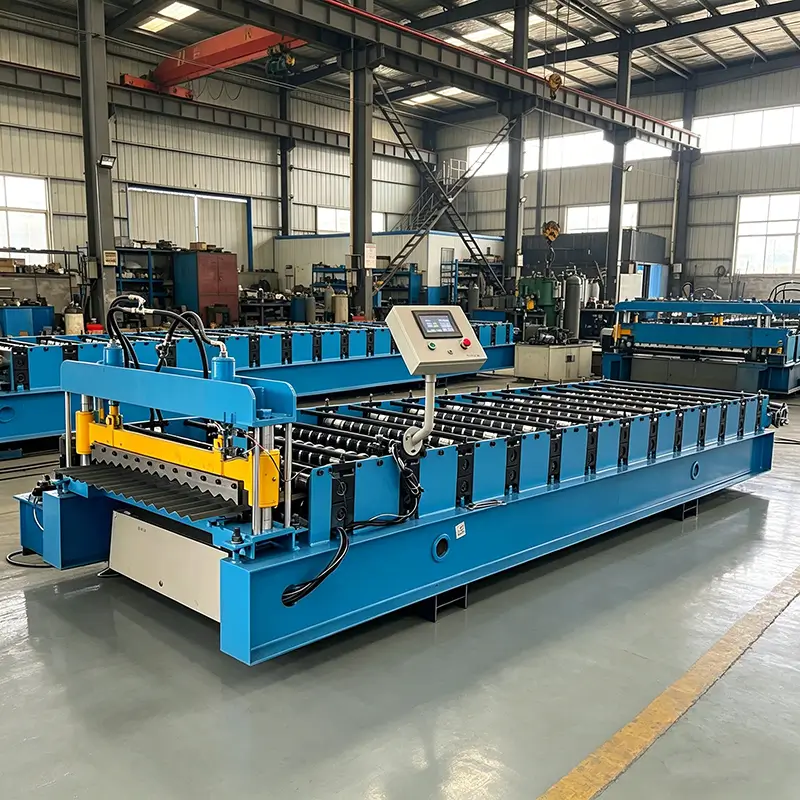
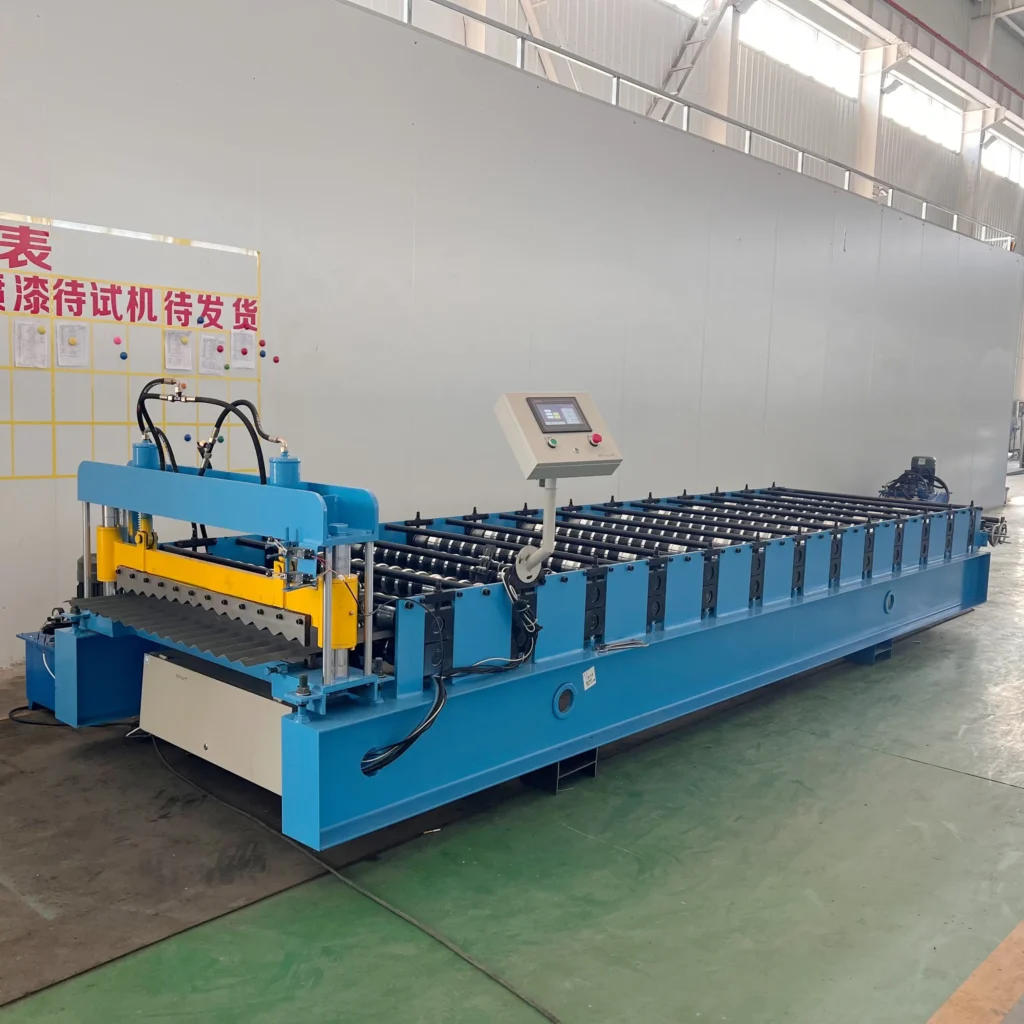
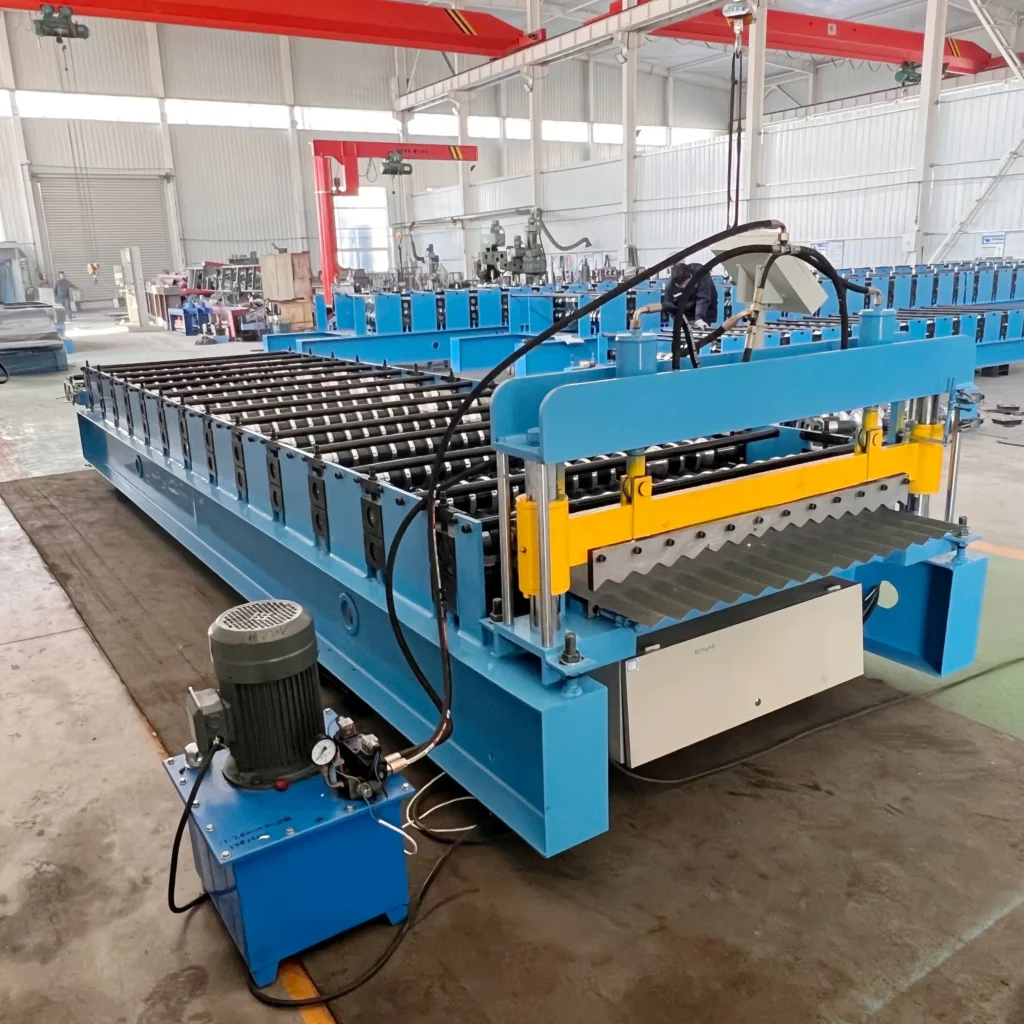
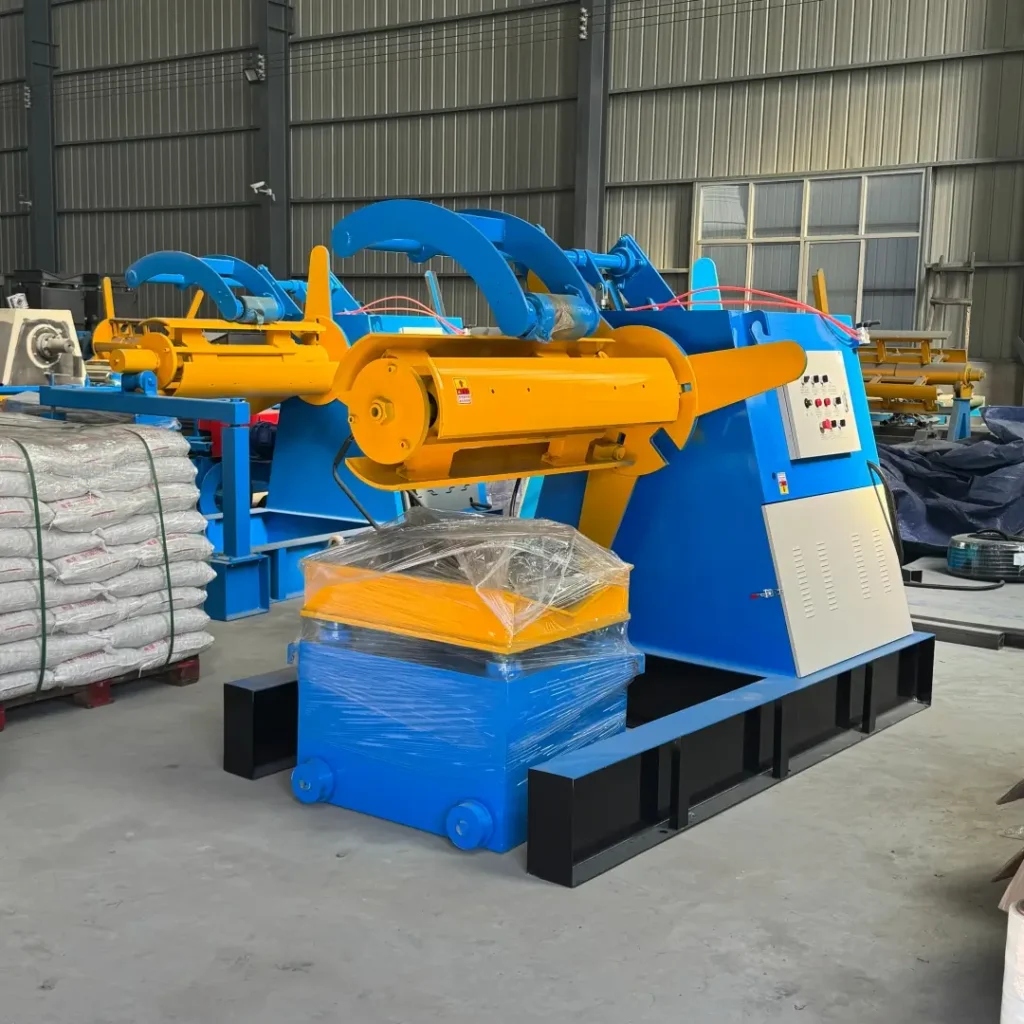
Simple and Reliable Design
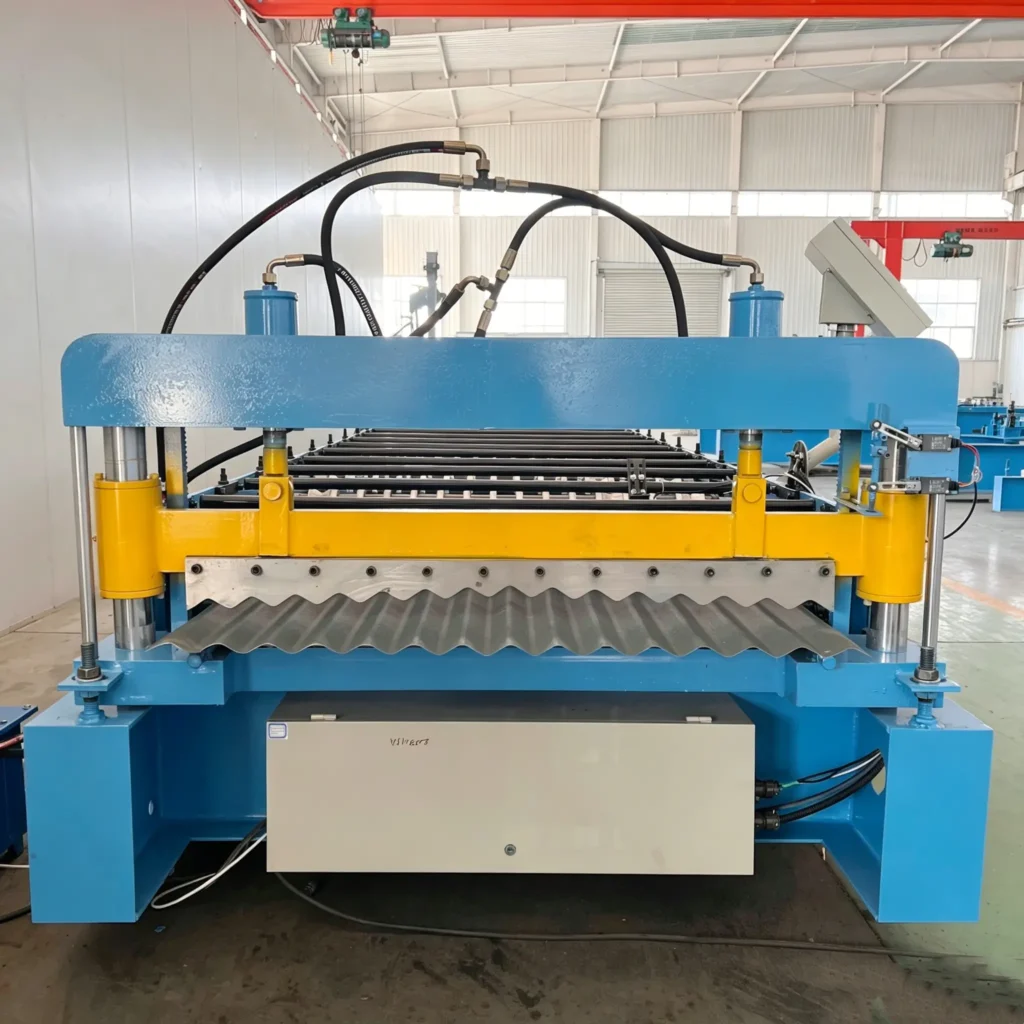
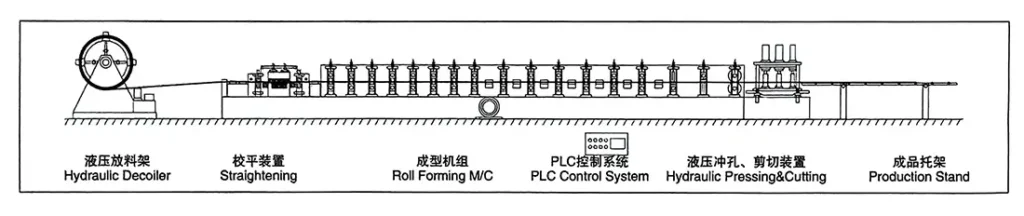
A streamlined forming system with fewer moving components makes the machine easy to maintain and reliable for continuous production, helping reduce maintenance requirements and downtime.
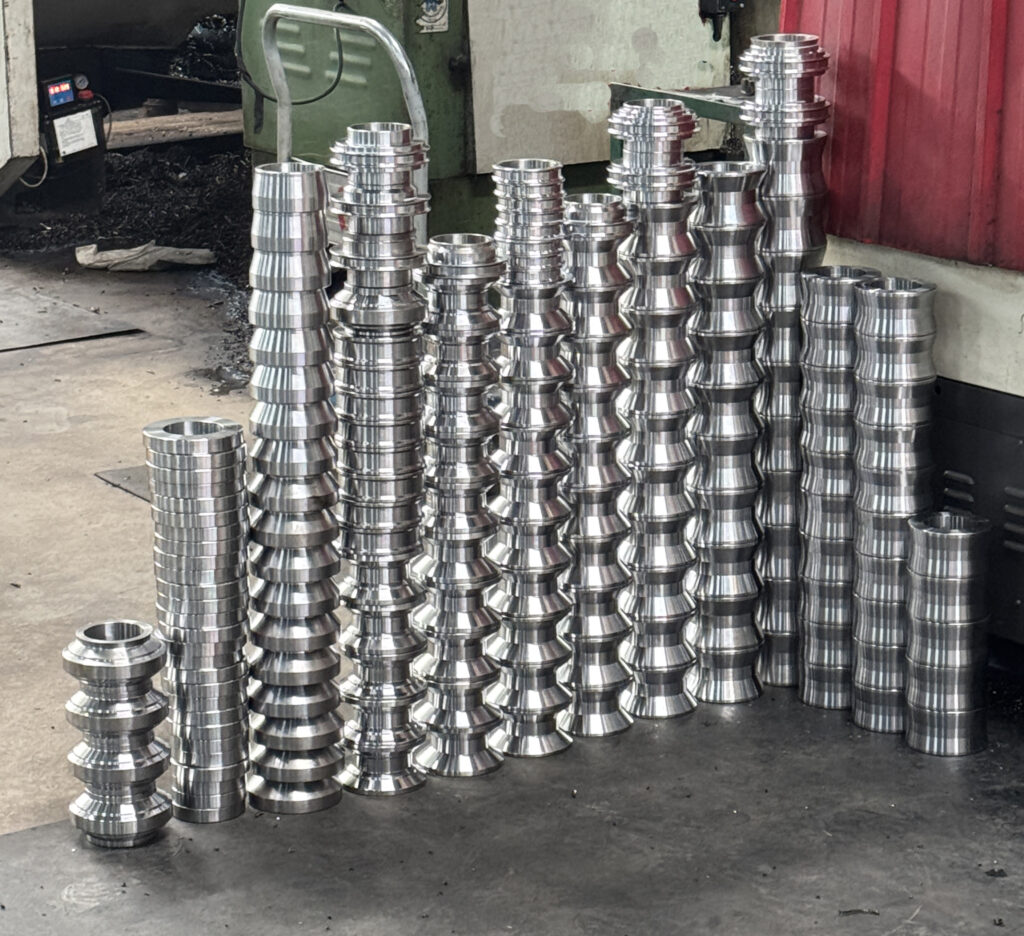
Precision Forming Rollers
The forming rollers are manufactured from 45# forged steel with hard chrome plating and CNC-machined for accurate profiling. The precision roller design helps maintain consistent panel shape and dimensions throughout the coil length.
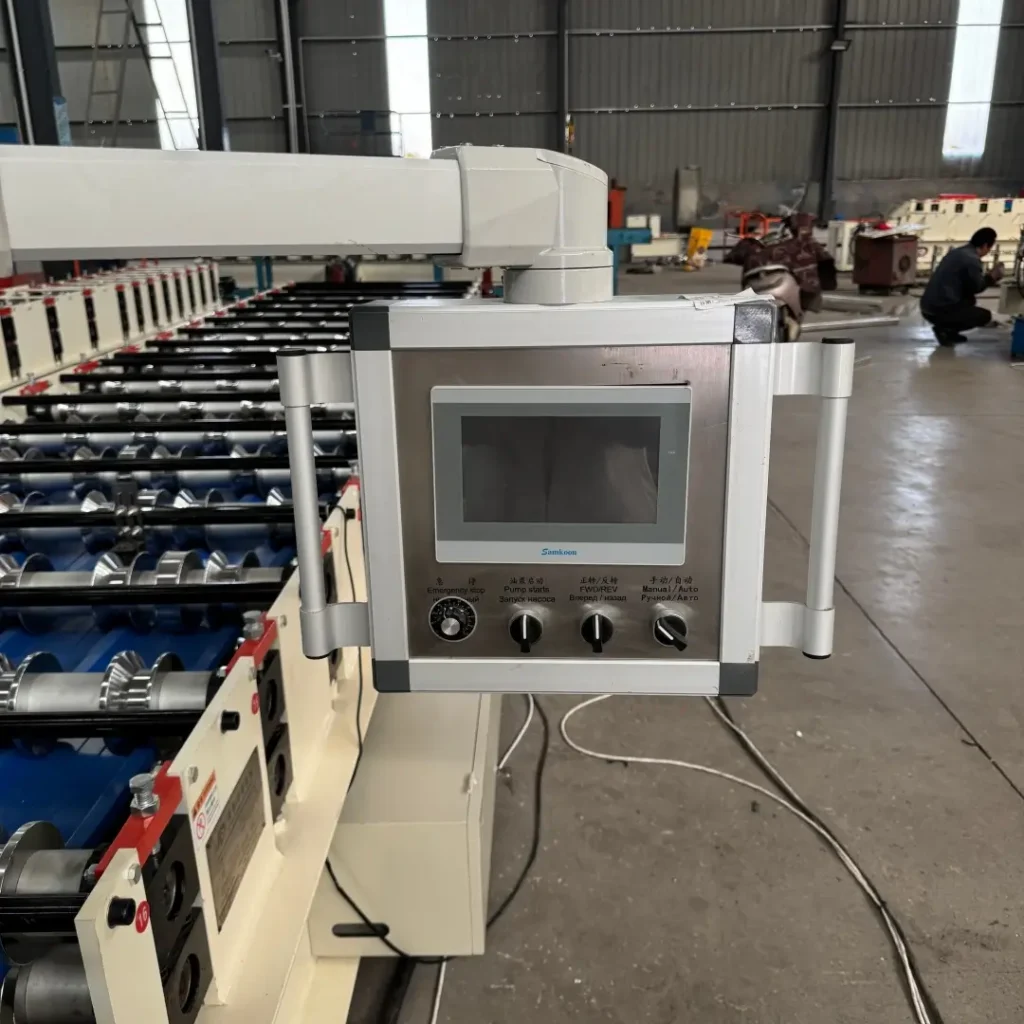
User-Friendly PLC Control
The machine features a PLC touchscreen control system for easy operation and production management. An optional manual counter is also available to meet different production requirements.
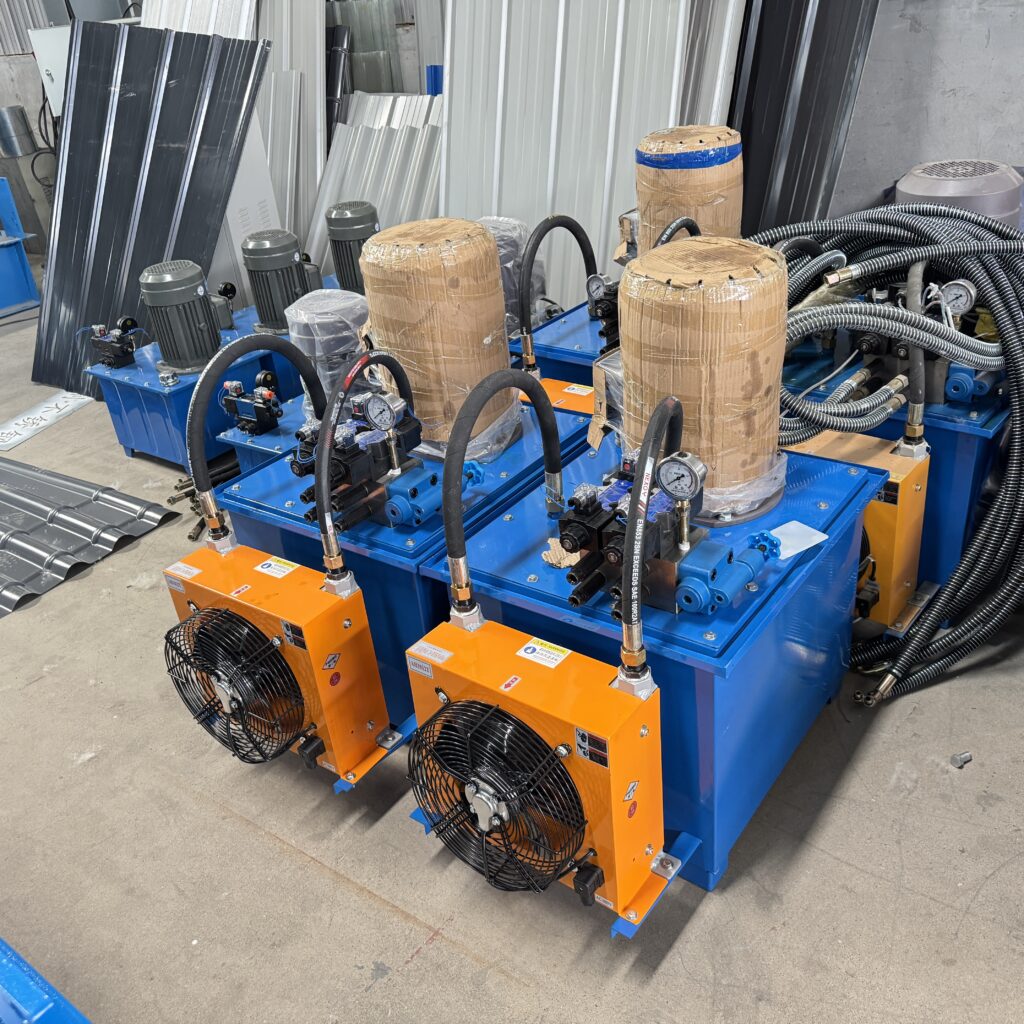
Clean and Precise Hydraulic Cutting
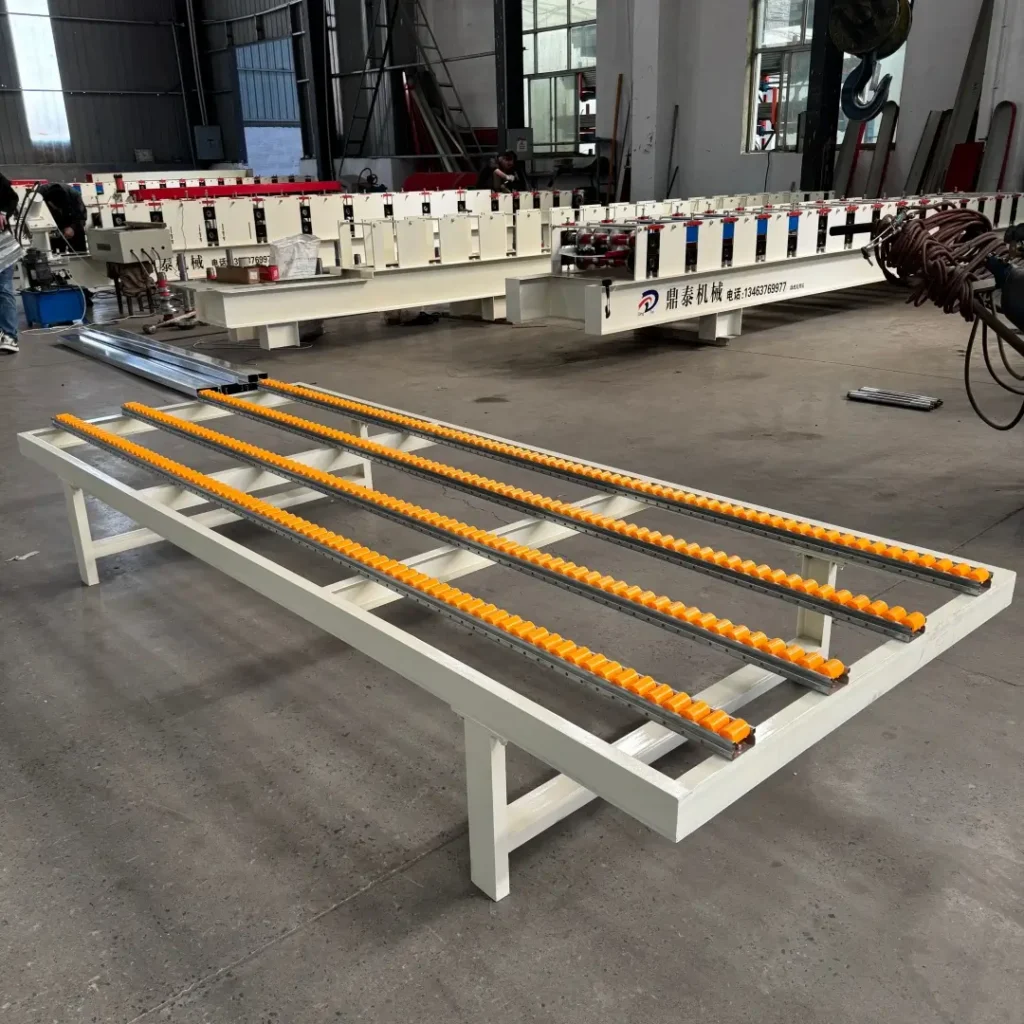
The hydraulic cutting system uses heavy-duty cutting blades to produce clean, accurate cuts with minimal burrs. Properly cut panels can be stacked neatly and handled easily.
Global Voltage Compatibility
The electrical system can be customized to meet local power requirements, including 220V / 380V / 415V and 50Hz / 60Hz configurations.
Compact and Space-Saving Design
The compact machine layout requires less workshop space, with machine lengths available from approximately 5 m, depending on the machine configuration. Optional casters can be provided for easier repositioning.
Cost-Effective Production
The streamlined machine design helps reduce initial equipment investment, maintenance requirements, and operating costs, making it suitable for both new and established metal roofing production lines.
Direct Factory Support
As a direct roll forming machine manufacturer, we provide readily available spare parts, professional technical assistance, and lifetime technical support to help maintain reliable machine operation.