
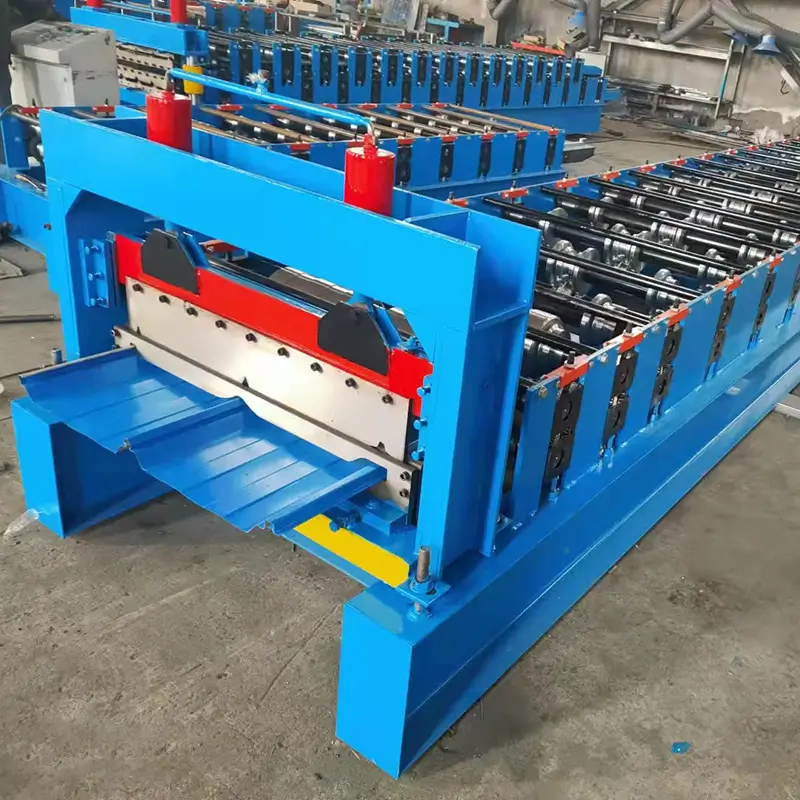
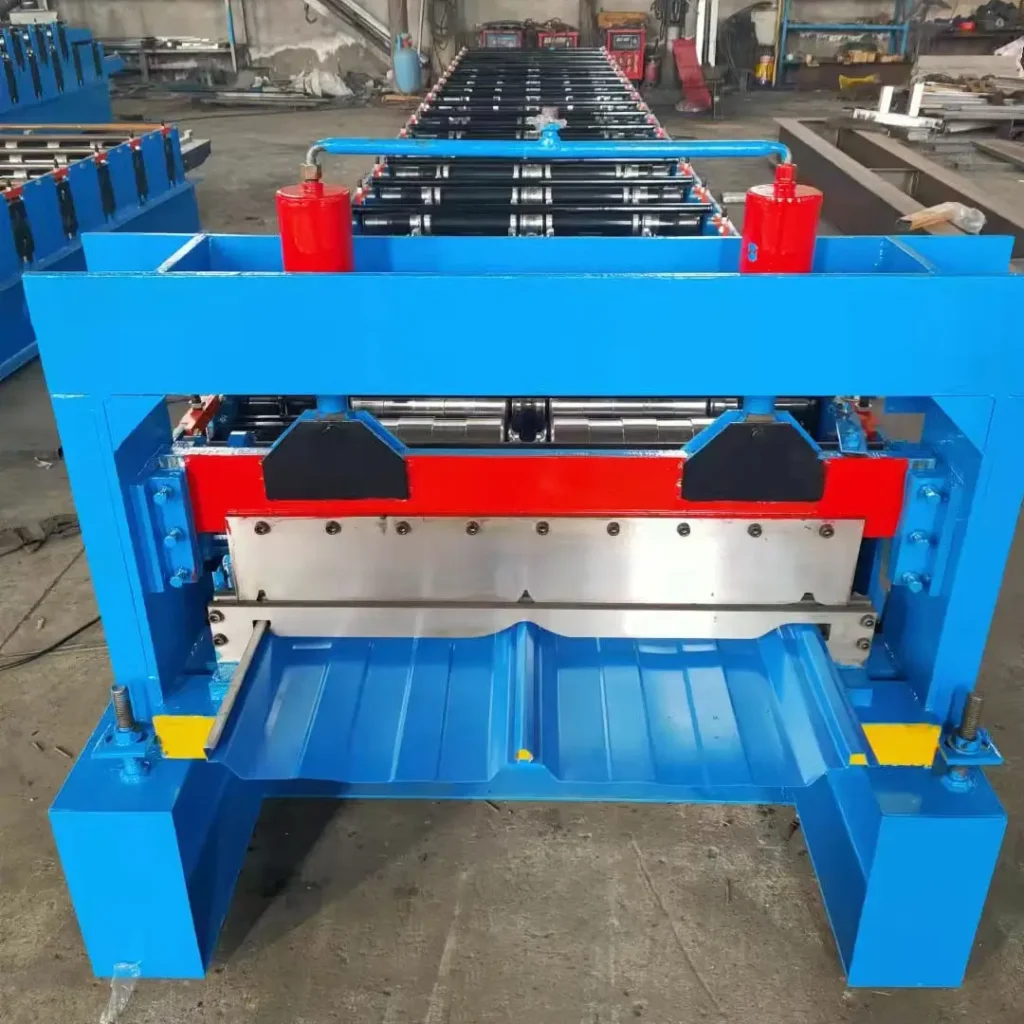
Joint Hidden Roll Forming Machine
Produce Concealed Fastener Standing Seam Roof Panels
- CE / ISO9001
- 0.3–0.8mm thickness
- 45° lock bite waterproof system
- Omega clip hidden fixing
Tel:0086 15194755533
Email:dtrollformingmachine@gmail.com
Product Overview
The Joint Hidden Roll Forming Machine, also known as the Standing Seam Roll Forming Machine, is a specialized cold roll forming system designed to produce metal roofing panels with a concealed fixing system. Unlike traditional roofing where screws or nails penetrate the panel surface, joint hidden panels feature an integrated mechanical lock that connects adjacent panels through hidden clips, resulting in a completely fastener‑free exterior.
The machine processes galvanized steel (GI), pre‑painted steel (PPGI), galvalume, or aluminum coils into precisely profiled standing seam panels. The unique panel design incorporates raised ribs (standing seams) on both longitudinal edges that interlock with each other. During installation, concealed clips are first attached to the roof substrate, and each panel then snaps or mechanically locks onto these clips. This creates a continuous, watertight roof surface without any exposed fasteners.
Standing seam roof panels have been used on roofs of traditional and contemporary homes for more than a century and are commonly used on roofs of commercial businesses because of the roofing’s outstanding durability. These standing seam roof panels have area clean and graceful lines that have been an enduring favorite on a wide range of architecture.
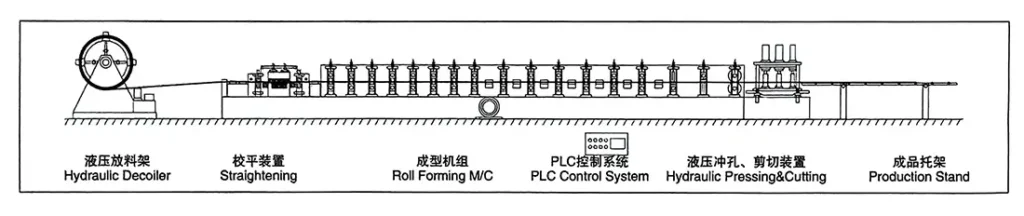
This machine integrates decoiling, roll forming, optional embossing, and hydraulic cutting into one continuous automatic line. It supports multiple panel widths, seam heights, and clip‑lock designs to meet diverse market requirements. The entire system is PLC‑controlled with a user‑friendly HMI touch screen, requiring only one operator for the whole line. All models are export‑ready with customizable voltage (220V–480V, 50/60Hz), CE certification, and anti‑rust wooden case packaging.
Key advantages of the joint hidden system:
- No through‑fasteners – No screws or nails penetrate the panel surface, eliminating potential leak points
- Superior weather resistance – The concealed clip system allows the roof to expand and contract with temperature changes without compromising the seal
- Clean, architectural appearance – The flat panel surface with slim standing seams provides a modern, elegant look
- High wind uplift resistance – The mechanical interlock between panels and concealed clips provides excellent structural performance
What Is a Standing Seam / Joint Hidden Roof Panel?
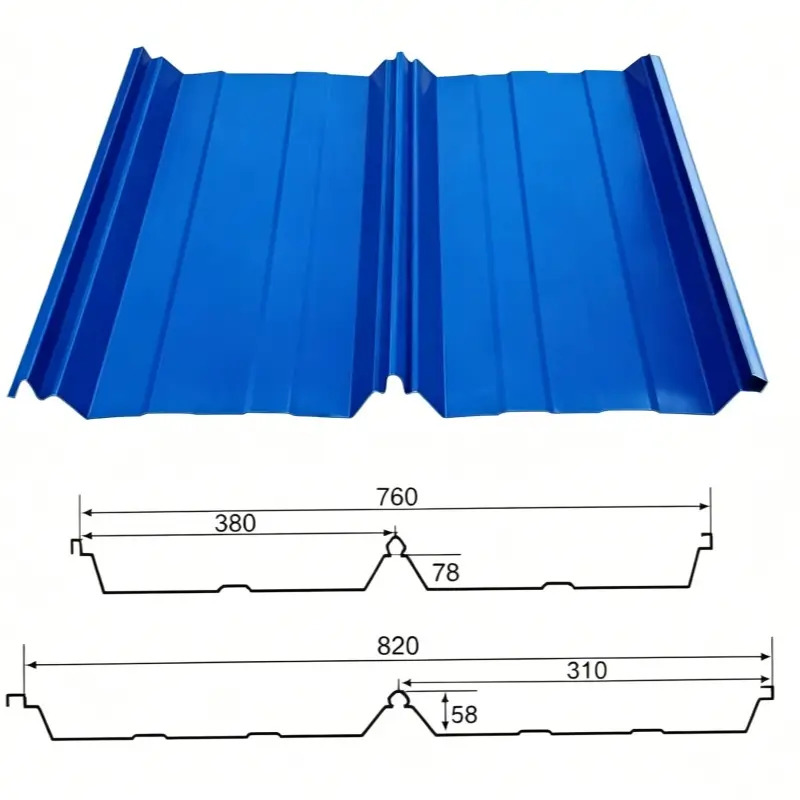
A standing seam metal roof panel features raised seams (ribs) along its longitudinal edges that lock together and are fastened to the roof by a nailing flange then hidden by the next sheet, no special tools needed for installation. The key features include:
- Concealed clip system: The steel sheet has a hidden fixing system based on clips; it reduces the risk of possible leaks since it is not required to drill the sheet for its installation.
- Snap‑lock or mechanical lock: The snap lock metal roofing panel is secured with concealed clips and the snap locking standing seam metal roofing panel ribs snap lock securely together without the use of special tools.
- Multiple seam heights: Common seam heights include 22 mm (1”), 38 mm (1‑1/2”), and 50 mm (2”).
- Panel width options: Finished panel coverage widths typically range from 300 mm to 610 mm (12”–24”).
Major Technical Specifications
| Specification | Standard Range |
|---|---|
| Raw Material | GI (Galvanized steel), PPGI (Pre‑painted steel), Galvalume, Aluminum |
| Material Thickness | 0.3 – 0.8 mm (0.4–0.8 mm for standard; heavy‑duty up to 1.2 mm) |
| Coil Feeding Width | 470 – 680 mm (depends on panel width design) |
| Finished Panel Coverage Width | 300 – 610 mm (12″–24″) |
| Seam Height (Rib Height) | *22 mm / 38 mm / 50 mm* (1″, 1‑1/2″, 2″) |
| Locking Type | Snap‑lock / Mechanical lock with concealed clips |
| Forming Stations | 12 – 22 stations (depending on profile complexity) |
| Roller Material | 45# / GCr15 steel, hard chrome plated, HRC58‑62° |
| Roller Processing | CNC precision machining, vacuum heat treatment, hard chrome plating (≥0.05mm), mirror polishing |
| Main Shaft Material | 45# forged steel quenched & tempered / 40Cr |
| Main Shaft Diameter | φ70 – φ80 mm |
| Main Motor Power | 5.5 – 11 kW |
| Hydraulic Station Power | 3 – 5.5 kW |
| Forming Speed | *8 – 15 m/min* (standard); up to *20 m/min* for simpler profiles |
| Drive System | Chain transmission (1″ – 1.5″ chain) or gearbox drive (upgrade) |
| Cutting System | Hydraulic post‑cutting (stop‑cut) / Servo flying shear (optional) |
| Cutting Blade Material | Cr12 / Cr12MoV, quenched HRC58‑62° |
| Cutting Length Tolerance | ±1.0 – ±2.0 mm |
| Embossing Unit (Optional) | Creates ribbed texture / decorative patterns on panel surface |
| Control System | PLC (Mitsubishi / Panasonic / Siemens / Delta) + HMI touch screen |
| HMI Features | Recipe storage, multi‑language interface (EN/ES/AR/FR/RU), production monitoring, fault diagnosis |
| Voltage / Frequency | 380V / 50Hz / 3 Phase *(customizable to 220V–480V, 50/60Hz)* |
| Machine Dimensions (L×W×H) | Approx. 7,000 – 10,000 mm × 1,200 – 1,500 mm × 1,300 – 1,500 mm |
| Machine Weight | Approx. 4 – 7 tons |
| Warranty | 24 months for main structure & rollers; 12 months for electrical components |
| Certification | CE, ISO 9001 (available upon request) |
Fully Automatic Workflow (How It Works)
Key Features & Benefits
1. Concealed Fastening for Superior Waterproofing
The joint hidden system uses concealed clips to attach panels to the roof structure, meaning no screws or nails penetrate the panel surface. This reduces the risk of possible leaks since it is not required to drill the sheet for its installation. Hidden fixing method without any fastening bolts and puncturing on the roof surface ensures completely leak‑proof performance.
2. High Wind Uplift Resistance
The mechanical interlock between panels and concealed clips provides very good wind uplift protection. Snap‑lock standing seam roof panel ribs snap securely together without special tools, offering maximum wind and weather resistance. This makes joint hidden panels ideal for coastal, high‑wind, or exposed locations.
3. Precision Roll Forming for Perfect Interlocking
Rollers made of 45# steel with hard chrome plating, processed by CNC machine tools to ensure accuracy – and thus the accuracy of roof sheet. Each panel interlocks precisely with the next, creating a continuous watertight seal. Consistent interlocking edges eliminate panel misalignment and ensure a professional finished appearance.
4. Thermal Expansion & Contraction Capability
The concealed clip system allows the roof to “float” on the roof deck, permitting expansion and contraction with temperature extremes without compromising the seal or causing panel buckling. This is particularly important for large roof areas subjected to significant daily or seasonal temperature changes.
Frequently Asked Questions (FAQ)
What is a joint hidden roll forming machine?
It is a cold roll forming machine that produces standing seam metal roof panels with a concealed clip fixing system. The resulting panels have no exposed fasteners, providing superior weatherproofing, higher wind uplift resistance, and a cleaner architectural appearance.
What is the difference between joint hidden and traditional roofing?
Traditional roofing uses screws or nails that penetrate the panel surface, creating potential leak points. Joint hidden systems use concealed clips that attach to the substrate; each panel then snaps or mechanically locks onto the clips. No penetrations = better weather protection and longer life.
What panel profiles can the machine produce?
Snap‑lock (ribs snap over clip – no tools required), field‑crimped / mechanical lock (seams are mechanically seamed on site after panel placement), clip‑lock / klip‑lok (clip attaches to deck, panel snaps over). Seam heights: 22mm, 38mm, 50mm (1″, 1‑1/2″, 2″). Coverage widths: 300mm to 610mm (12″–24″).
What is the role of concealed clips in the standing seam system?
Clips are attached to the roof substrate (wood or metal). Each panel snaps or mechanically locks onto the clips. This creates a continuous, watertight roof surface without exposed fasteners. The clip system also allows the roof to expand and contract with temperature changes without buckling.