
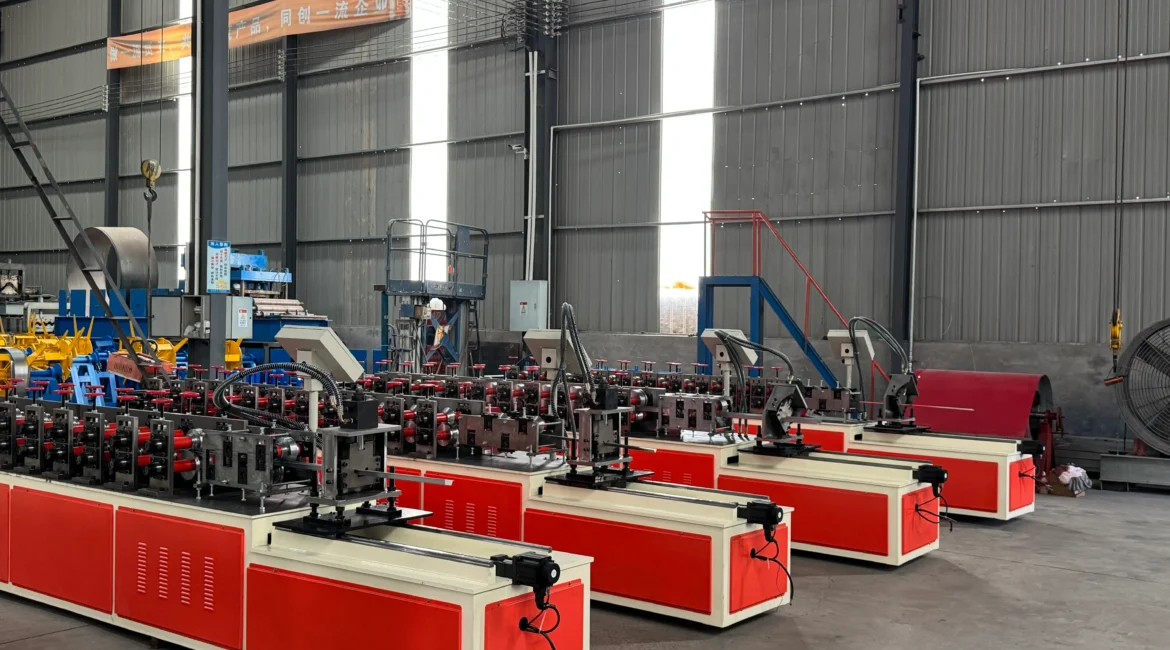
Light steel keel roll forming machines are widely used in the building materials industry to manufacture metal framing profiles for ceiling systems and interior partitions. With a continuous cold roll forming process, steel strips are gradually shaped into specific profiles to meet different construction requirements.
For manufacturers of ceiling and drywall framing materials, choosing the right light steel keel roll forming machine is essential for maintaining consistent product dimensions, improving production efficiency, and meeting customer specifications.
What Is a Light Steel Keel Roll Forming Machine?
A light steel keel roll forming machine is specialized equipment that processes steel coils into finished metal framing profiles. The machine uses a series of rollers to gradually form the steel strip into the required cross-sectional shape.
Depending on the product design, a production line may include an uncoiler, feeding unit, roll forming stations, punching equipment, a cutting system, and a PLC control system.
The final profile shape depends on the customer’s drawings, material specifications, and intended application. Different machine configurations can be developed to manufacture different types of ceiling channels, furring channels, and other lightweight steel profiles.
Applications of Light Steel Keel Profiles
Light steel keel profiles are commonly used in interior construction and building finishing projects.
Ceiling Framing Systems
Metal ceiling profiles provide structural support for suspended ceiling installations. They are used in residential buildings, offices, hotels, shopping centers, and commercial interiors.
Drywall Partition Systems
Specific steel profiles are used to construct lightweight interior partition frameworks. Depending on the profile design, these products can support drywall installation in residential and commercial buildings.
Customized Building Profiles
Manufacturers may require different profile dimensions, hole patterns, and material thicknesses for different markets. A customized roll forming machine can be designed around the required product drawings and production specifications.
How Does a Light Steel Keel Roll Forming Machine Work?
The production process generally involves several stages.
1. Steel Coil Feeding
The steel coil is loaded onto the uncoiler and fed into the production line. The feeding system supplies the material for continuous forming.
2. Progressive Roll Forming
The steel strip passes through multiple roller stations. Each station gradually changes the shape of the material until the required profile is formed.
3. Punching and Hole Formation
When the finished profile requires mounting holes or specific openings, a punching unit can be incorporated into the machine according to the product design.
4. Automatic Cutting
The cutting system cuts the formed profile to the required length. The cutting method and control settings depend on the machine configuration and production requirements.
5. Finished Profile Inspection
The finished products should be checked for profile dimensions, cutting length, surface condition, and other specified quality requirements.
Key Features of Our Light Steel Keel Roll Forming Machine
Customized Roller Design
The roller stations are designed according to the required profile shape and dimensions. Proper tooling design helps achieve stable forming performance and consistent finished profiles.
PLC Control System
A PLC control system can be configured to manage production settings, cutting length, and quantity, depending on the selected machine model.
Integrated Production Options
The production line can be configured with feeding, punching, cutting, and other auxiliary equipment to suit different manufacturing requirements.
Flexible Machine Configuration
Roller tooling, punching arrangements, cutting systems, and automation options can be selected according to the target profile and production plan.
Manufacturer-Direct Support
Working directly with the equipment manufacturer allows customers to discuss profile drawings, machine specifications, production requirements, and technical support before placing an order.
How to Choose the Right Light Steel Keel Roll Forming Machine
Before purchasing a light steel keel roll forming machine, it is important to confirm the following details:
- Profile drawing: Provide a cross-sectional drawing with the required dimensions.
- Material specifications: Confirm the steel type, material thickness, and coil width where applicable.
- Punching requirements: Specify the positions, sizes, and quantities of any required holes.
- Finished length: Confirm the required product lengths and cutting tolerances.
- Production capacity: Define the target output and expected operating schedule.
- Automation requirements: Consider the required feeding, cutting, counting, and other production functions.
These details help the manufacturer recommend a machine configuration that matches the customer’s actual production needs.
Customized Light Steel Keel Roll Forming Solutions
Different markets may require different steel keel profiles and production standards. A suitable roll forming solution should therefore be designed around the finished product rather than relying on a machine name alone.
As a roll forming machine manufacturer, we work with customers to evaluate profile drawings, material specifications, and production requirements before recommending suitable equipment.
Whether you are expanding an existing production line or planning a new building materials manufacturing project, sharing your profile drawings and technical requirements is a practical first step toward selecting the right machine.
Contact us today to discuss your light steel keel roll forming machine requirements and request a customized solution.