
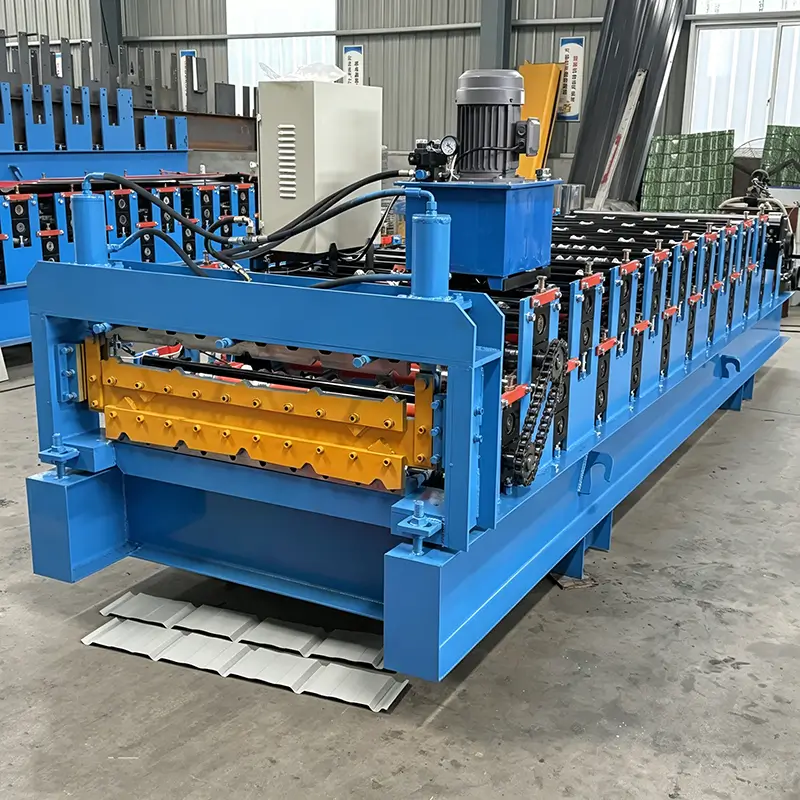
Double layer roll forming machine
Two Profiles, One Machine, One Footprint
- CE / ISO9001
- Two independent forming stations
- Quick changeover (15–30 min)
- 15+ years experience
Tel:0086 15194755533
Email:dtrollformingmachine@gmail.com
What Is a Double Layer Roll Forming Machine?
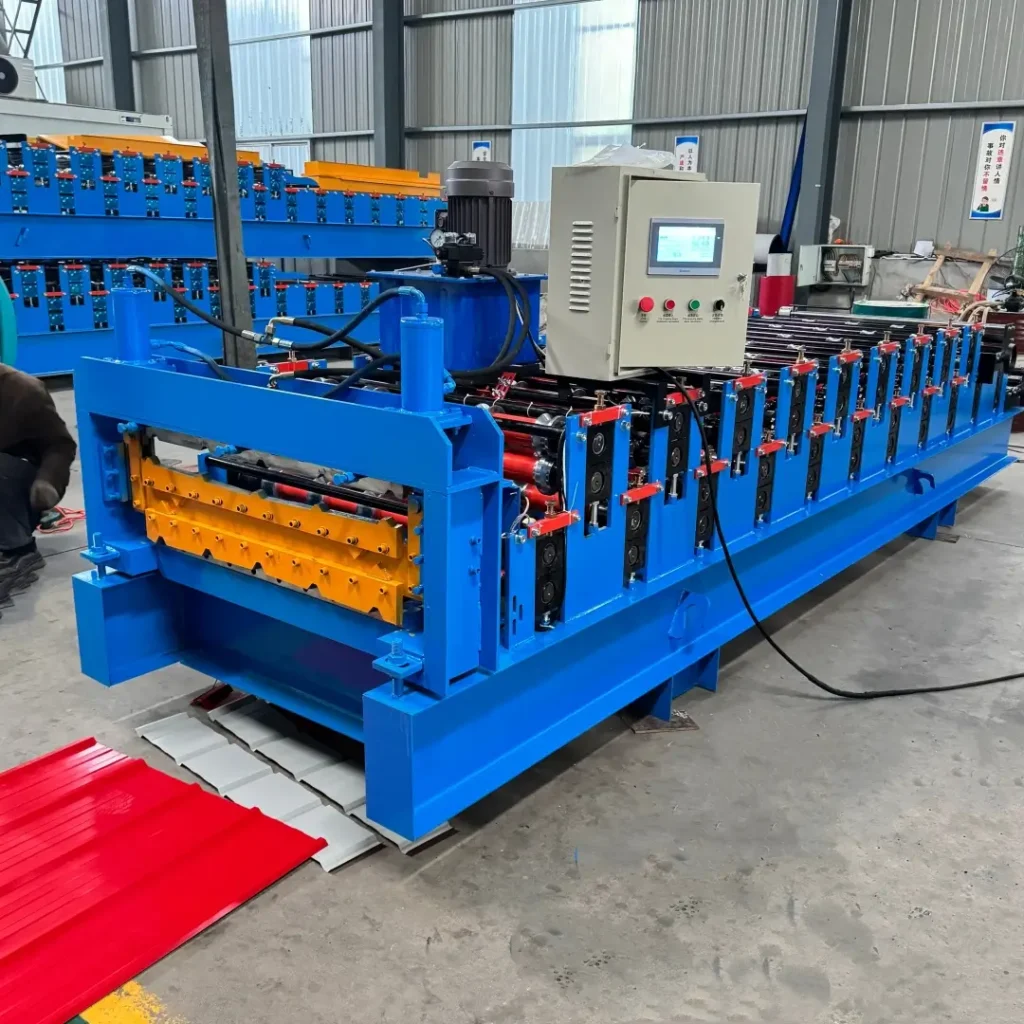
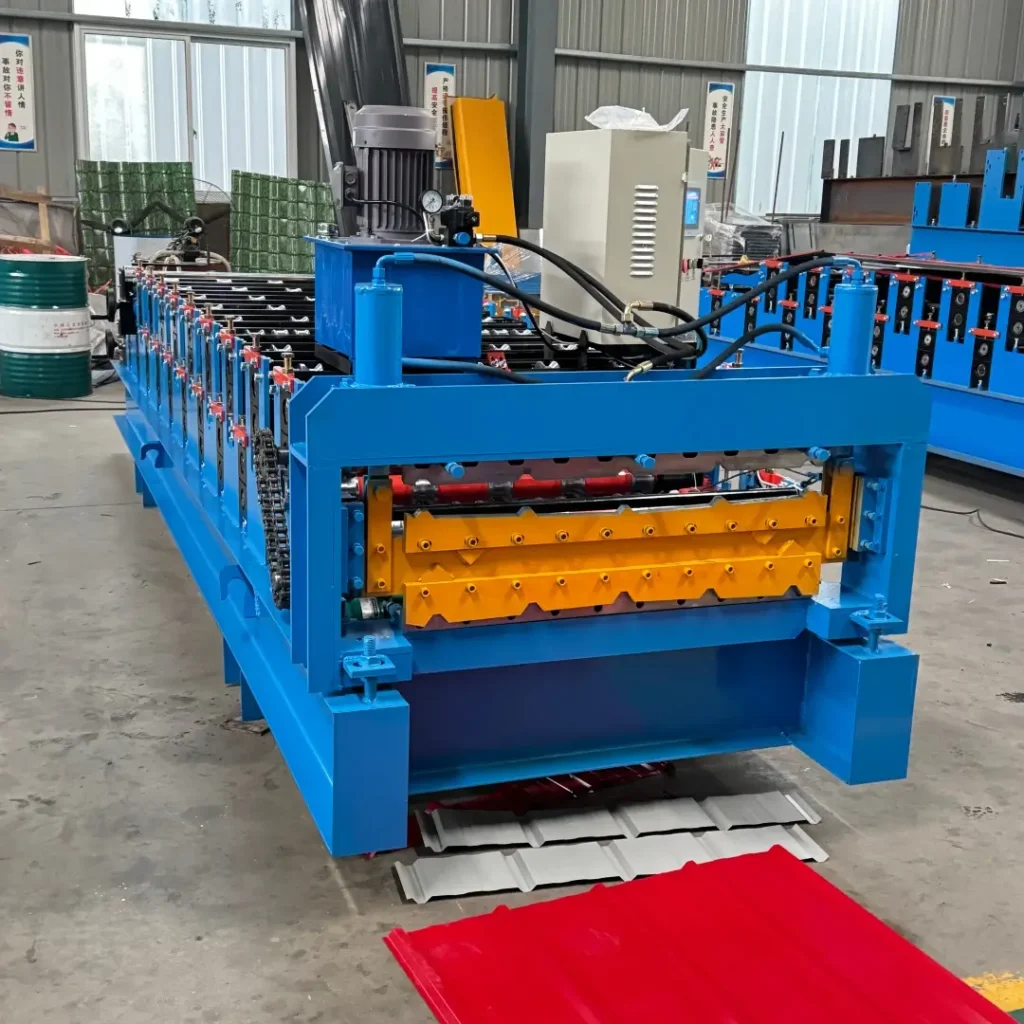
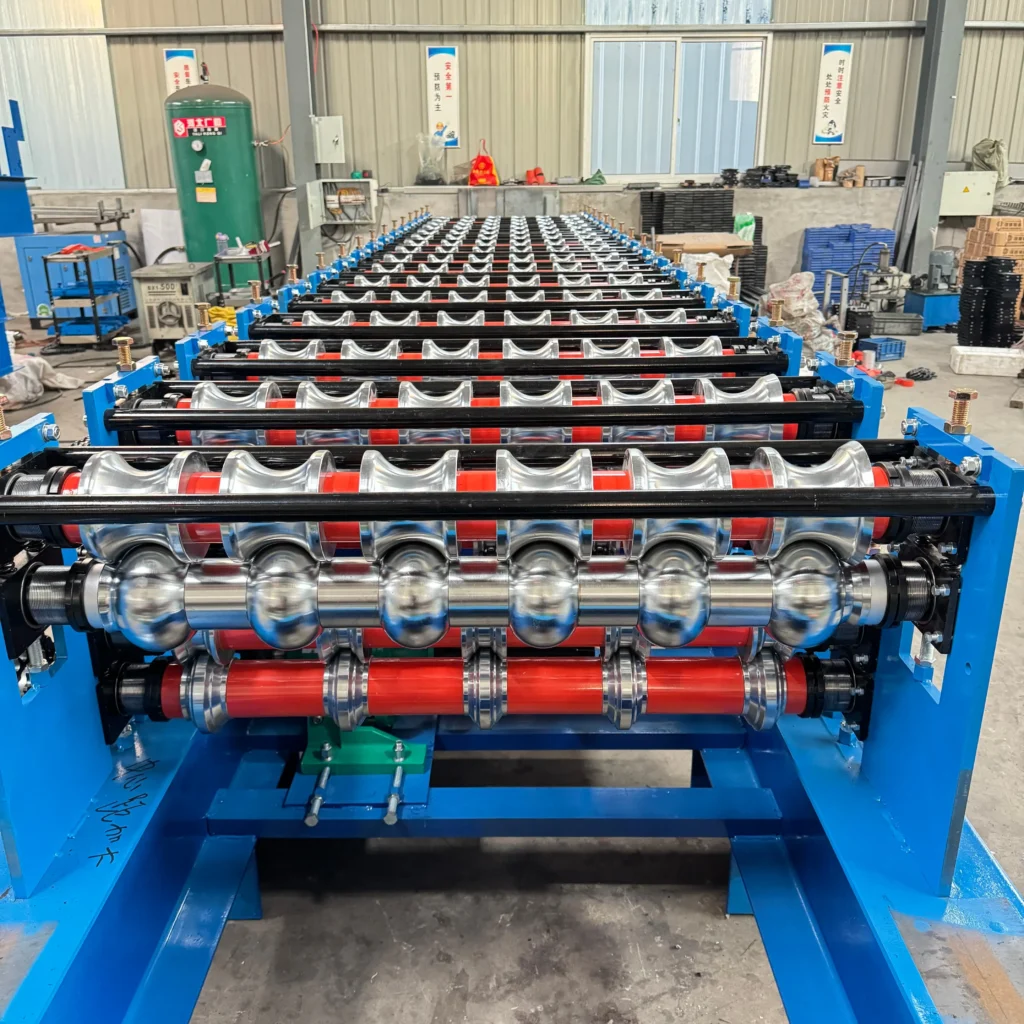
The Double Layer Roll Forming Machine is a space-saving, cost-efficient solution designed to produce two different metal roofing or wall panel profiles on a single machine. It integrates two independent roll forming systems into one compact vertical frame – an upper layer and a lower layer – enabling manufacturers to expand their product range without purchasing multiple machines.
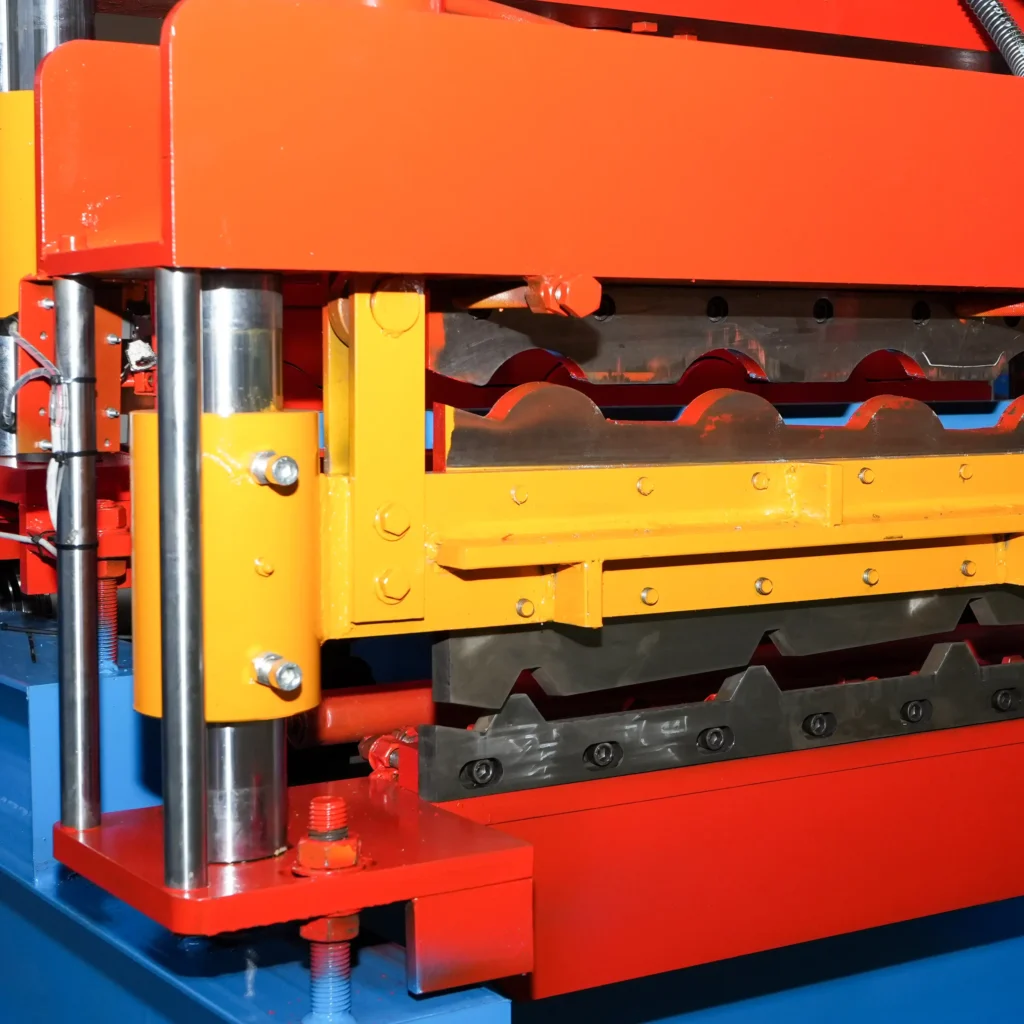
The double layer design typically features a clutch or electric lifting mechanism to switch between layers. This configuration allows production of two different profiles (e.g., IBR + corrugated, trapezoidal + glazed tile, or two corrugated profiles) using a single control cabinet, single hydraulic station, and one operator.
Ideal for manufacturers with limited factory space, startups looking to reduce initial investment, or established producers needing to add a second profile to their product line quickly. The machine is fully automatic, PLC-controlled, and export-ready with customizable voltage and CE certification.
Key capability: Available in two configurations – single shared motor with clutch switching between layers, or dual independent motors for each layer (higher cost, allows independent operation).
Why Choose a Double Layer Machine
1. One Machine, Two Profiles – Save Capital Investment
Instead of investing in two separate single-layer lines at double the cost, you get two functions in one machine. This reduces equipment investment by approximately 50% compared to purchasing two separate single-layer machines. No need to buy, install, and maintain two complete lines
2. Save Factory Floor Space – Up to 50% Less Footprint
A double layer machine occupies only 1/2 to 1/3 of the floor space required by two separate single-layer machines. The vertical integration keeps both forming units within a single H‑type steel frame, ideal for small workshops or crowded production floors
3. Fast Profile Switching – Minimal Downtime
Operators switch between upper and lower layers simply by pressing a button on the control cabinet (electric lifting or clutch engagement). No tooling change, no roller replacement, no hours of machine reconfiguration. Switch profiles in minutes, not hours.
4. Shared Components – Lower Maintenance Costs
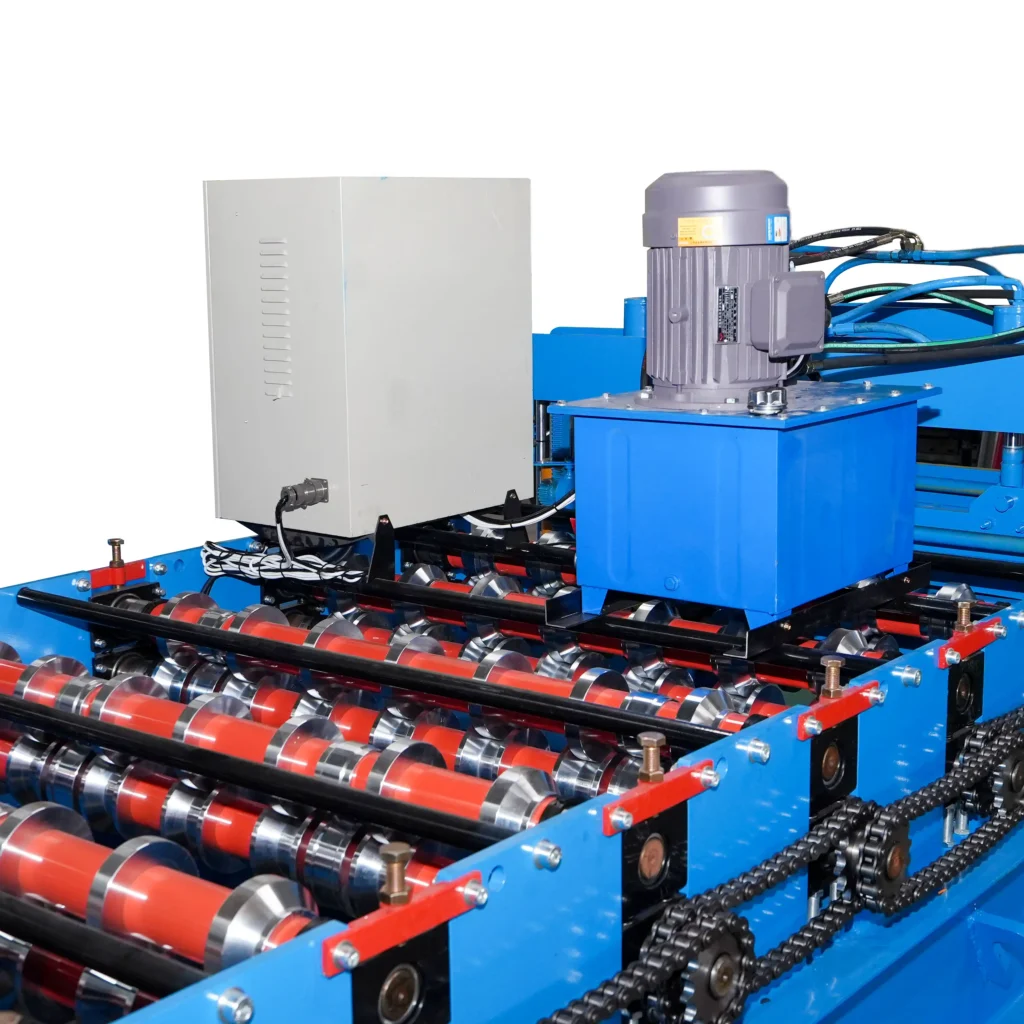
One machine shares one PLC control cabinet, one hydraulic station, and one operator. This simplifies maintenance, reduces spare parts inventory, and lowers long-term operating costs compared to managing two separate machines.
5. High Productivity with the Same Labor Force
The double layer design significantly improves production efficiency compared to traditional single-layer tile presses, with output increases of up to 50%–90%. One operator handles the entire line, freeing up personnel for other tasks.
6. Consistent Quality Across Both Profiles
Both layers are built with the same high-quality components, including GCr15 or 45# steel rollers, hard chrome plating, and precision CNC machining. Both forming layers deliver consistent forming accuracy, with cutting tolerances of up to ±1 mm, as well as excellent durability and long service life.
7.Energy Efficient – Run Two Profiles, Consume One Machine’s Energy
Compared to running two separate machines, a double layer machine consumes less power while delivering the same output capacity, reducing your electricity costs.
Profile Combinations
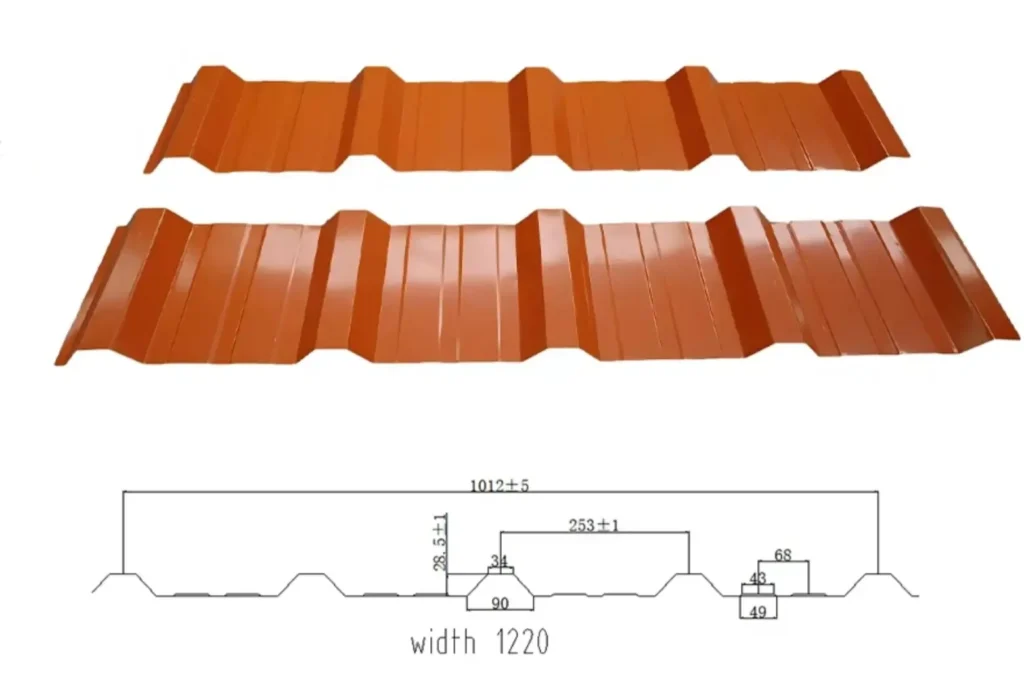
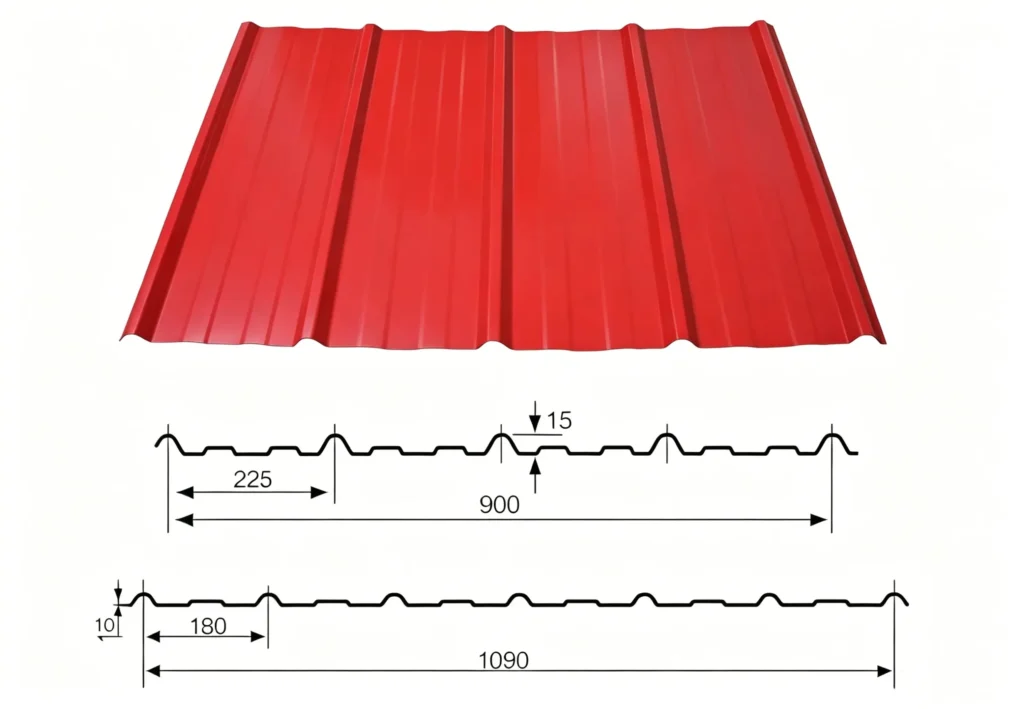
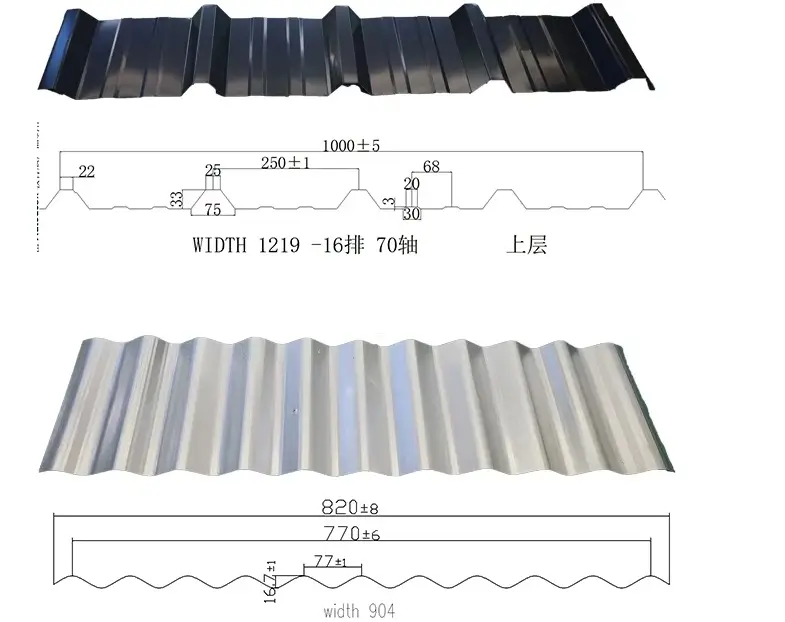
We can manufacture the double layer roll forming machine according to your requirements and drawings. You can choose any of the following combinations:
| Combination Type | Examples |
|---|---|
| Two roof / wall profiles | Trapezoidal + Corrugated, IBR + Step Tile |
| Two IBR profiles | Different IBR specifications |
| Two corrugated profiles | Different wave heights / cover widths |
| One IBR + one corrugated | Most popular for versatile roofing operations |
| One glazed tile + one IBR or corrugated | Aesthetic tile + functional profile |
| Trapezoidal + trapezoidal | Two different trapezoidal panel styles |
| Custom as per drawing | Any two profiles within machine capability |
Technical Specifications
| Specification | Typical Value / Range |
|---|---|
| Machine Type | Double layer roll forming machine |
| Forming Structure | Upper and lower double layer design |
| Machine Frame | 300H–400H welded H‑type steel, sidewall thickness 14–22 mm |
| Layers / Lines | Two independent forming lines (one active at a time) |
| Raw Material | PPGI, GI, Galvanized steel, Aluminum, Color steel |
| Material Thickness | 0.3 – 0.8 mm (customizable up to 1.0‑1.2 mm) |
| Feeding Width | 914 – 1250 mm (1000 / 1200 / 1220 / 1250 mm common) |
| Effective Cover Width | 500 – 1100 mm (depends on profile) |
| Forming Stations (Total) | 11 – 22 stations (distributed between layers) |
| Roller Material | 45# steel with hard chrome plating / GCr15 bearing steel |
| Roller Processing | CNC precision machining, heat treatment, hard chrome plating (0.05 mm), polishing |
| Shaft Material & Diameter | 45# forged steel / 40Cr; φ70 – φ80 mm (solid shaft) |
| Drive Type | Chain transmission (1‑inch chain) or gearbox drive |
| Forming Speed (Lower Layer) | *8 – 20 m/min* |
| Forming Speed (Upper Layer / Tile) | *0 – 4 m/min* (slower for complex tile profiles) |
| High‑Speed Model Speed | *Up to 30 – 60 m/min* (flying shear, thinner material) |
| Main Motor Power | 5.5 – 11 kW per layer (shared via clutch or independent) |
| Hydraulic Station Power | 3 – 5.5 kW (shared) |
| Cutting System | Hydraulic post‑cutting (stop‑cut) or electric flying shear |
| Cutting Blade Material | Cr12 / Cr12Mov, quenched HRC58‑62° |
| Cutting Length Tolerance | ±1.0 mm – ±1.5 mm |
| Length Control | Encoder automatic measurement |
| Layer Switching Method | Electric lifting system / Clutch engagement / Button control |
| Control System | PLC (Mitsubishi / Panasonic / Siemens / Delta) + HMI touch screen |
| Operation Interface | Touch screen & button (multi‑language support) |
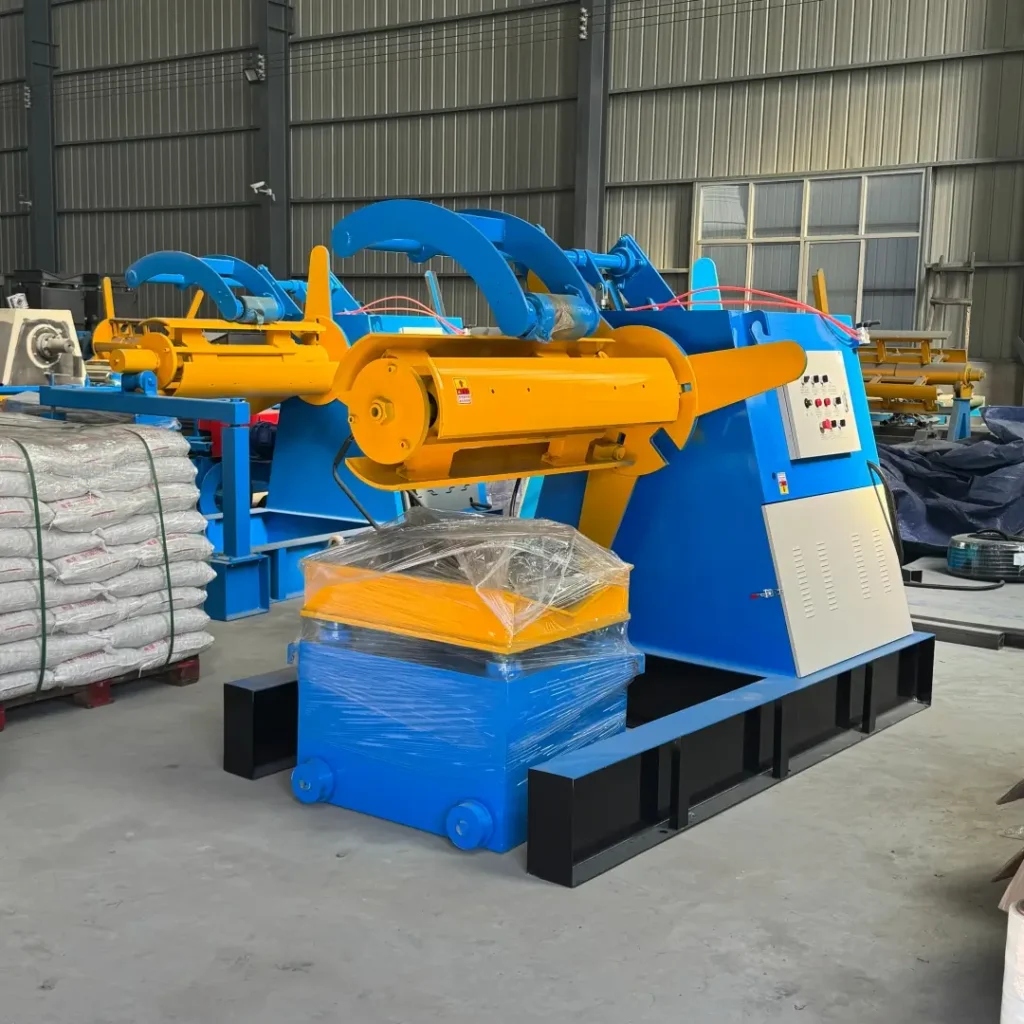
| Decoiler Type | Manual or hydraulic (5‑10 ton capacity) |
| Voltage / Frequency | 380V / 50Hz / 3P (customizable to 220V‑480V, 50/60Hz) |
| Machine Dimensions (L×W×H) | Approx. 6,500 – 8,600 mm × 1,300 – 1,500 mm × 1,200 – 1,450 mm |
| Machine Weight | Approx. 4.5 – 9 tons |
| Warranty | 1‑2 years (structure & rollers) |
| Certification | CE, ISO 9001 (available upon request) |
Key operational notes
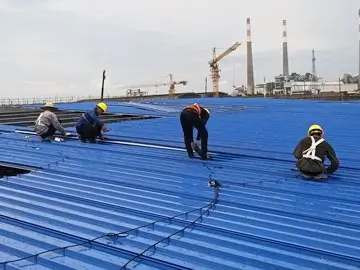
Applications
Frequently Asked Questions
What is a double layer roll forming machine?
A double layer roll forming machine integrates two separate roll forming systems (upper and lower layers) into a single vertical frame, allowing you to produce two different metal panel profiles without needing a second machine.
Can both layers run at the same time?
No, only one layer can be active at any given time. The two forming layers share the same motor – switching between layers is done via a clutch mechanism. This design prioritizes cost saving and space efficiency over simultaneous production.
What profile combinations can I choose?
You can choose any combination: two roof or wall profiles, two IBR profiles, two corrugated profiles, one IBR + one corrugated, glazed tile + IBR, glazed tile + corrugated, or trapezoidal + other types.
What materials can the machine process?
PPGI (pre‑painted galvanized iron), GI (galvanized steel), Galvalume, aluminum, and standard steel coils.