Floor Deck Roll Forming Machine

Floor Deck Roll Forming Machine​

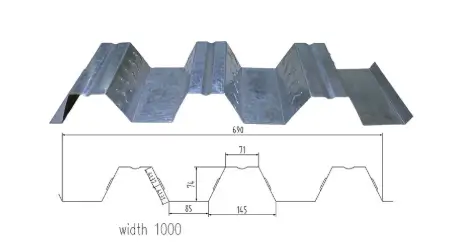
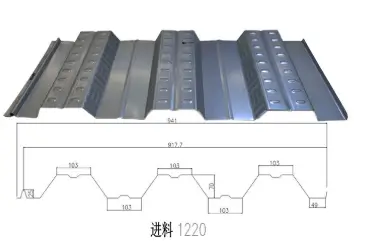
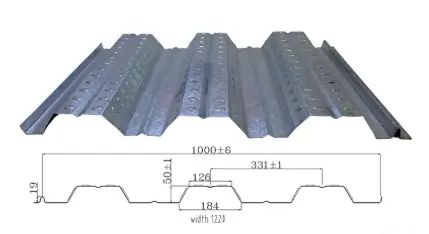
Deep‑ribbed floor decking (2” to 3” rib height)
Tel:0086 15194755533
Email:dtrollformingmachine@gmail.com

What is Floor Deck Roll Forming Machine​

Our floor deck roll forming machine forms steel through a series of hardened rollers using a cold process, creating precise, complex profiles such as trapezoidal or dovetail without welding. The process requires minimal operator intervention thanks to a fully PLC-controlled system. It processes high-yield-strength galvanized steel (typically 0.6mm to 1.5mm thick) at speeds of 8–15m/min, producing strong, lightweight, and cost-effective structural components with long-term service life

A steel floor deck (also called composite floor deck, form deck, or deep rib deck) is a corrugated steel panel used as permanent formwork and bottom reinforcement for concrete slabs in steel‑framed buildings. It is widely used in commercial high‑rise buildings, parking structures, hospitals, schools, and industrial mezzanines.

Key characteristics of floor deck profiles:

FeatureTypical Value
Rib height2″ – 3″ (50mm – 75mm)
Rib spacing5″ – 8″ (125mm – 200mm)
Effective coverage24″ – 36″ (600mm – 900mm)
Material thickness0.8mm – 1.5mm (20–18 gauge)
Yield strengthMin 33 ksi (230 MPa) – often 50 ksi (345 MPa)

Standard floor deck profiles (by rib pattern):
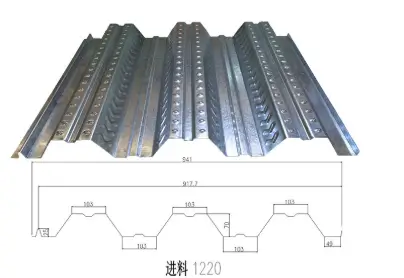
  • B‑Deck (2″ rib height, 6″ pitch, 36″ coverage) – most common for general composite slabs
  • N‑Deck (3″ rib height, 8″ pitch, 24″ coverage) – for longer spans and heavier loads
  • V‑Deck (2″ rib height, fluted shape) – less common, some regional preferences
  • Custom profiles – We can design rollers for any floor deck section drawing

Major Technical Specifications

SpecificationTypical Range / Value
Raw MaterialGI (Galvanized steel), Galvalume, PPGI (Pre-painted steel)
Material Yield Strength280 – 550 MPa (G250 to G550)
Material Thickness0.6 – 1.5 mm
Coil Width / Stock Width600 – 1250 mm (Customizable)
Effective Coverage Width500 – 1100 mm (varies by profile)
Profile Types SupportedTrapezoidal (B, N, F), Dovetail (Re-entrant), Deep Deck
Forming Stations22 – 30 stations (depends on profile complexity)
Roller Material*40Cr / GCr15* bearing steel, hard chrome plated, HB 220–260 / HRC58-62°
Main Shaft Diameterφ75 – φ95 mm
Machine Frame300 – 400 H welded steel
Drive SystemChain transmission (double chain) or optional gearbox drive
Main Motor Power22 – 30 kW (total)
Forming Speed (Standard)*8 – 15 m/min*
Forming Speed (High-Speed)*15 – 20 m/min* (for simpler profiles)
Cutting SystemHydraulic post-cutting / Servo Flying Cut-Off
Cutting Blade MaterialCr12 / Cr12MoV, quenched HRC58-62°
Cutting Length Tolerance±1.0 mm – ±2.5 mm (depends on length)
Control SystemPLC (Siemens / Mitsubishi / Panasonic / Delta) + HMI touch screen
HMI FeaturesRecipe storage, multi-language interface, production monitoring, fault diagnosis
Voltage / Frequency*380V / 50Hz / 3 Phase* (customizable to 220V–480V, 50/60Hz)
Machine Dimensions (L×W×H)Approx. 14,000 – 18,000 mm × 1,600 – 2,000 mm × 1,500 mm
Machine WeightApprox. 12 – 18 tons
Warranty24 months for main structure & rollers; 12 months for electrical components
CertificationCE, ISO 9001 (available upon request)

Fully Automatic Workflow

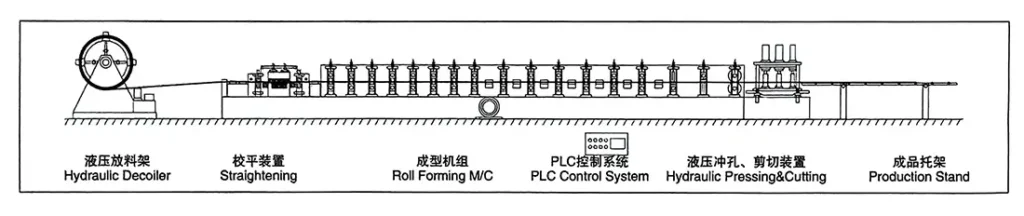
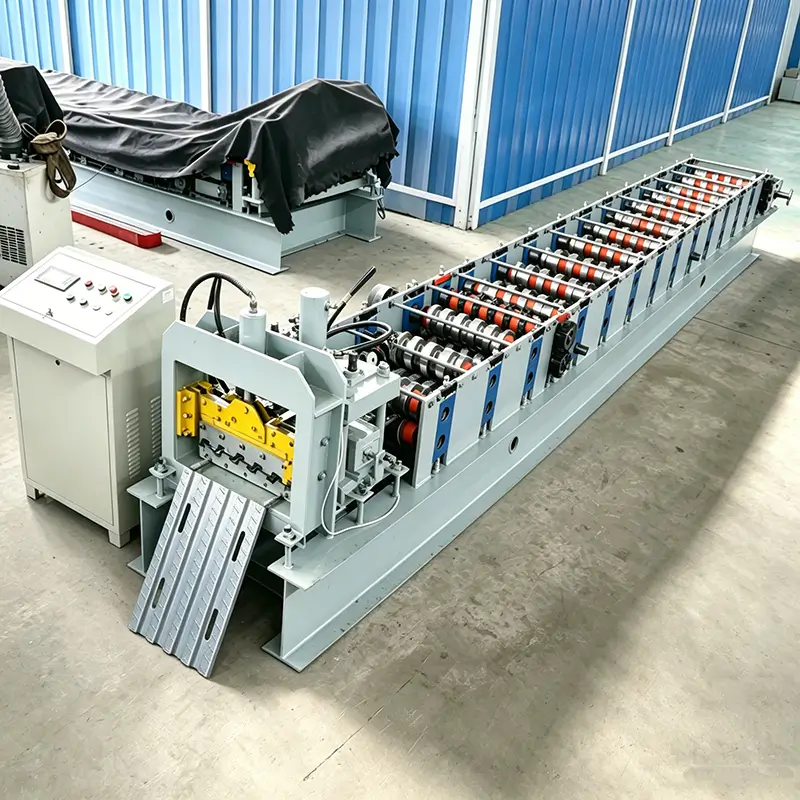
Heavy Decoiler → Coil Car → Leveling / Feeding → Pre‑punching (optional) → Roll Forming (18–26 stations) → PLC Length Setting → Hydraulic Cutting → Output Conveyor → Stacker

Production Line Flow

Step‑by‑step description:

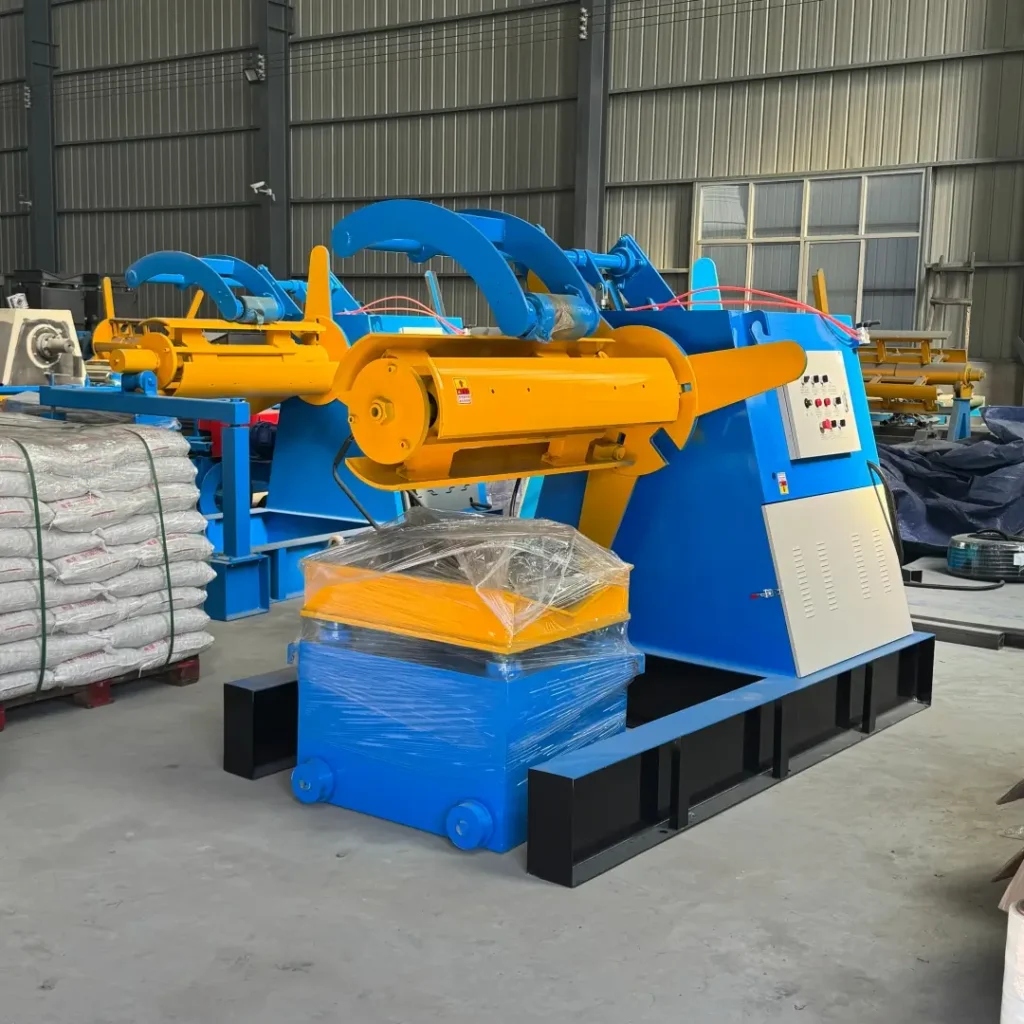
  1. Coil loading – Steel coil (up to 15 tons) is loaded using a coil car onto the hydraulic decoiler.
  2. Uncoiling & leveling – The strip is unwound and passed through a heavy‑duty leveler to remove coil curvature.
  3. Pre‑punching (optional) – Holes for shear studs or attachment tabs can be punched inline.
  4. Roll forming – The strip passes through 18–26 roller stations, gradually forming the deep ribs. The heavy frame and large spindles handle the stress of thick steel.
  5. PLC control – Operator sets panel length (typically 6m – 12m for floor spans) and quantity on touch screen.
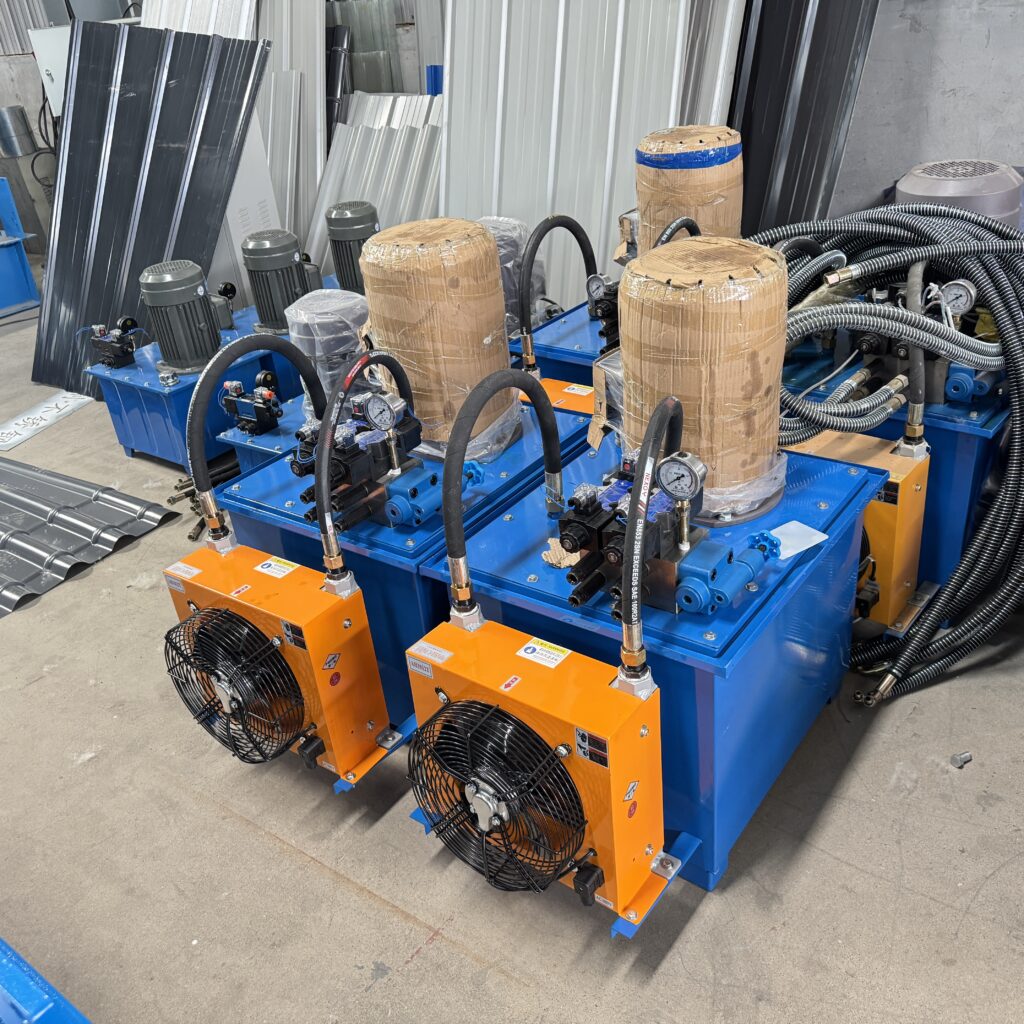
  6. Hydraulic cutting – A heavy‑duty shear cuts the formed panel to length. For flying cut, the shear moves with the panel, eliminating downtime.
  7. Output & stacking – Panels are conveyed to an automatic stacker and packed for delivery.

Frequently Asked Questions

What is the difference between composite deck and form deck?

Composite deck has embossments on the flutes that bond with concrete, making the steel act as positive bending reinforcement, which increases floor strength. Form deck has no embossments and serves only as a permanent formwork, providing no structural reinforcement after concrete cures

What steel grades and thicknesses can the machine process?

Standard machines process galvanized or Galvalume steel with yield strengths ranging from 280 to 550 MPa (G250 to G550) and thicknesses from 0.6mm to 1.5mm. Heavy-duty configurations can be designed for thicker gauges upon request

What is the typical forming speed?

Standard operating speed is 8–15m/min. High-speed models for less complex profiles can run at 15–20m/min. Actual speed depends on profile complexity, material thickness, and punching/embossing requirements

How accurate is the cutting length?

Cutting tolerance is ±1.0mm for panels up to 5,000mm length, and ±2.5–3.0mm for longer panels up to 10,000mm. Higher precision can be achieved with servo flying cut-off systems

We specialize in the production of cold-bending roll forming equipment for sheet metal used in major industries such as guardrails, doors and windows, light-gauge steel framing, color-coated steel, and dust removal systems.

Latest News

Contact

Email

dtrollformingmachine@gmail.com

Tel

0086 15194755533

Address

Nanpi, Cangzhou , Hebei Province China